Scroll through listings near Burns and you will see the same phrase attached to nearly every one: part of the Cheyenne, Wyoming Metropolitan Statistical Area. It reads like a promise of proximity, maybe even infrastructure. What it actually describes is a commuting pattern the Census Bureau tracks for statistical purposes, tying Burns to Cheyenne's labor market. It says nothing about who supplies your water, and in Burns, that question splits the town in half.
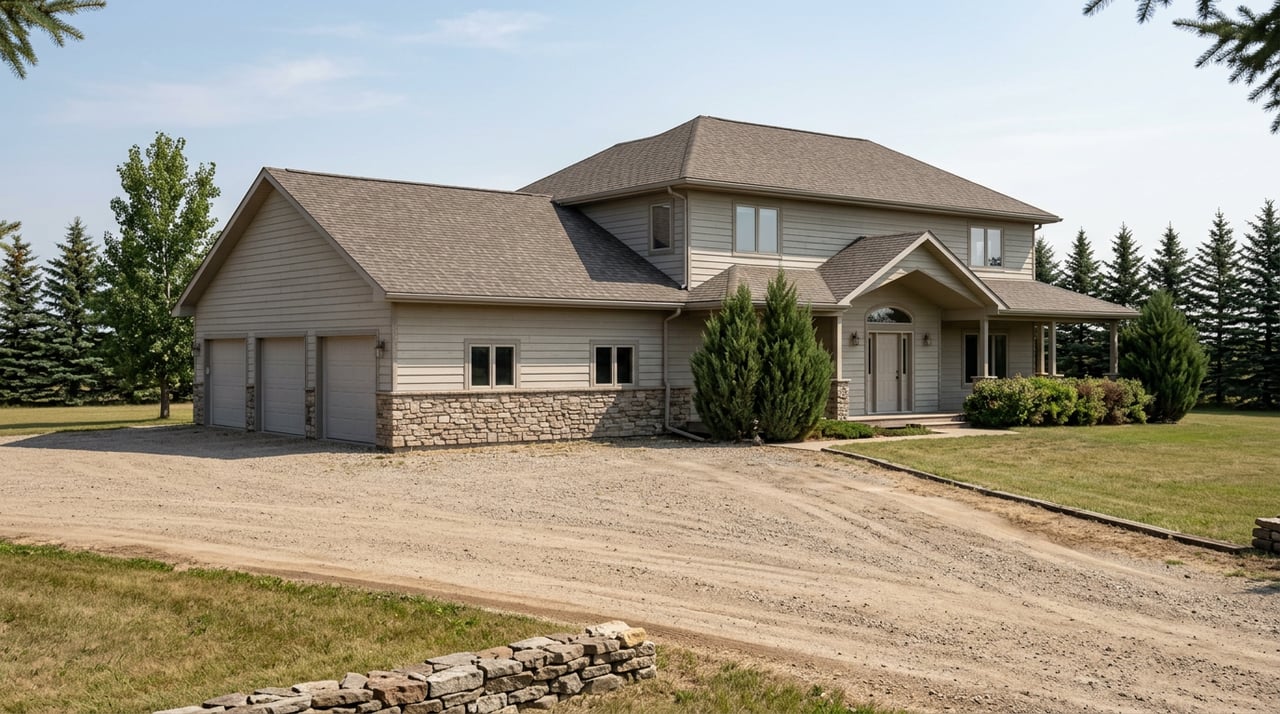
Burns counted 356 residents at the 2020 census, and the town's own recorded history notes that as recently as 2023, Main Street remained the only paved road running through its four blocks. That is the town. Around it sits acreage, subdivided into parcels with names like Lonesome Dove Ranches and Cripple Creek Estates, marketed to buyers who want space rather than sidewalks. Both fall inside the same MSA boundary. Only one of them ties into a municipal pipe.
Two Towns Inside One ZIP Code
The Wyoming Water Development Commission keeps a statewide registry of public water systems, and Burns, Town of appears on it as its own entry. That means the town runs its own municipal water utility, separate from Cheyenne's system 25 minutes down the road and separate from anything a well permit would touch. If your lot sits inside those four blocks, on Main Street where the pavement runs, you are very likely on that system.
Step outside the town limits and the ground changes under you. There is no water line to tie into. The well on that property becomes the entire water supply, and the septic system underneath the yard is the only sewer connection there will ever be. This is not a Burns quirk. It is how rural Wyoming works everywhere the pavement stops.
The most searched Burns-area neighborhood right now is Saddle Ridge, and it is an acreage community, not the in-town blocks themselves. Most of the interest in "Burns" is really interest in the land around Burns, which means most buyers browsing these listings are shopping for a well and septic system whether the listing description says so or not.
What the Listings Actually Show
Pull a snapshot of Burns inventory from earlier this year and the price spread starts to make sense once you sort it by which side of town it sits on. In May 2026, the Cheyenne MLS feed showed eight active Burns properties, and the split tracked the town line almost exactly.
| Listing type | Example | Price | Water source |
|---|---|---|---|
| In-town bare lot | 0.98-acre lot fronting N. Main St | $110,000 | Town of Burns municipal system |
| Acreage subdivision lot | Tract 19, Lonesome Dove Ranches, 6.01 acres | $120,000 | Buyer drills a private well |
| Acreage home | Cripple Creek Estates, 3 bed / 2 bath, 3,262 sq ft | $515,000 | Private well and septic |
| Rural land near Burns, listing average | Active land parcels in the area, per-acre basis | $70,482 per acre | None until built, well cost due at construction |
Two lots, similarly priced around $110,000 to $120,000, sit on opposite sides of that town line. One connects to a system someone else maintains. The other requires the buyer to fund a well before the property produces a drop of water. The sale price does not tell you which one you're looking at. The subdivision name and the address do.
The Basement That Isn't Approved for What You Think
One new-construction listing east of Cheyenne near Burns, built by Leaning Tree Homes, is a two-bedroom ranch plan with an unfinished basement, sitting on just over 7 acres. It's the kind of home a buyer plans to grow into, finishing that basement down the road into two more bedrooms for a home office or a guest suite.
Here's the part that catches people off guard. Wyoming counties that permit septic systems size them by bedroom count, not by square footage. A system approved for a two-bedroom home is sized for two bedrooms' worth of wastewater flow, full stop. Finish that basement into a four-bedroom footprint and the county will want the septic system sized to match before signing off, a permitting step that has nothing to do with the drywall inspection a buyer moving from a municipal-sewer property would expect. It's an approval process most in-town buyers, on the Burns municipal system or on Cheyenne's, never have to think about at all.
The Loan Type Decides Whether Anyone Tests the Water
There's a second wrinkle that shows up at financing, not at the county office. FHA and VA loans generally require a water quality test on a private well as part of underwriting. Conventional financing often skips that requirement entirely, which means two buyers purchasing the identical acreage listing, one with an FHA loan and one with a conventional loan, can go through meaningfully different due diligence on the same well. Flow rate testing, the kind that tells you whether a well can actually keep up with a working household's demand rather than just whether the water is safe to drink, is rarer still outside those loan programs.
None of this applies to an in-town lot on the Burns municipal system. The water utility handles quality and supply the same way any city system does. The distinction only matters once you cross onto private well ground, which in Burns is most of what's actively for sale.
Why the Metro Label Still Matters, Just Not the Way You Think
The Cheyenne MSA designation is real and it is useful, mostly for understanding commuting ties and regional labor market data. It is not a proxy for infrastructure, and Burns is the clearest example of why. A federal statistical boundary and a municipal water district boundary are two different lines drawn for two different reasons, and only one of them shows up on your utility bill.
The practical move for anyone comparing a Burns listing to something in Cheyenne proper, or comparing two Burns listings against each other, is to ask one direct question before writing an offer: whose water system serves this specific parcel. The subdivision name is usually the tell. Lonesome Dove Ranches and Cripple Creek Estates mean private well and septic. An address on Main Street inside the four blocks likely means the Town of Burns utility. The MSA label on either one tells you nothing.
Frequently Asked Questions
Does every Burns-area listing come with a well and septic system? No. Lots and homes inside the Town of Burns' four blocks typically connect to the town's own municipal water system. Acreage subdivisions surrounding the town, including Lonesome Dove Ranches and Cripple Creek Estates, rely on private wells and septic.
Can I tell which system a property uses just from the listing sheet? Not always in plain language, but the subdivision name and acreage are strong indicators. An address directly on Main Street with a small in-town lot size points to municipal service. A named acreage subdivision or a parcel of five acres or more points to a private well.
Does being inside the Cheyenne Metropolitan Statistical Area affect my loan approval or utility access? No. MSA status is a Census Bureau classification built around commuting ties to a core city, used for regional statistics. It does not determine which utility serves a specific parcel, and it does not change loan eligibility on its own. The county permitting authority and, separately, the loan type you use are what actually shape the well and septic requirements you'll face.
If you're weighing an in-town Burns lot against an acreage listing in Saddle Ridge or Cripple Creek Estates, the sale price alone won't tell you what you're actually buying into. Homes with Asha can walk the specific parcel, confirm the water source, and flag the permitting history before you write the offer. Get your free home value report and let's find out which side of the line fits your plans.